

Electrogenerated acid-catalyzed diastereoselective glycosylation with glycosyl acetates
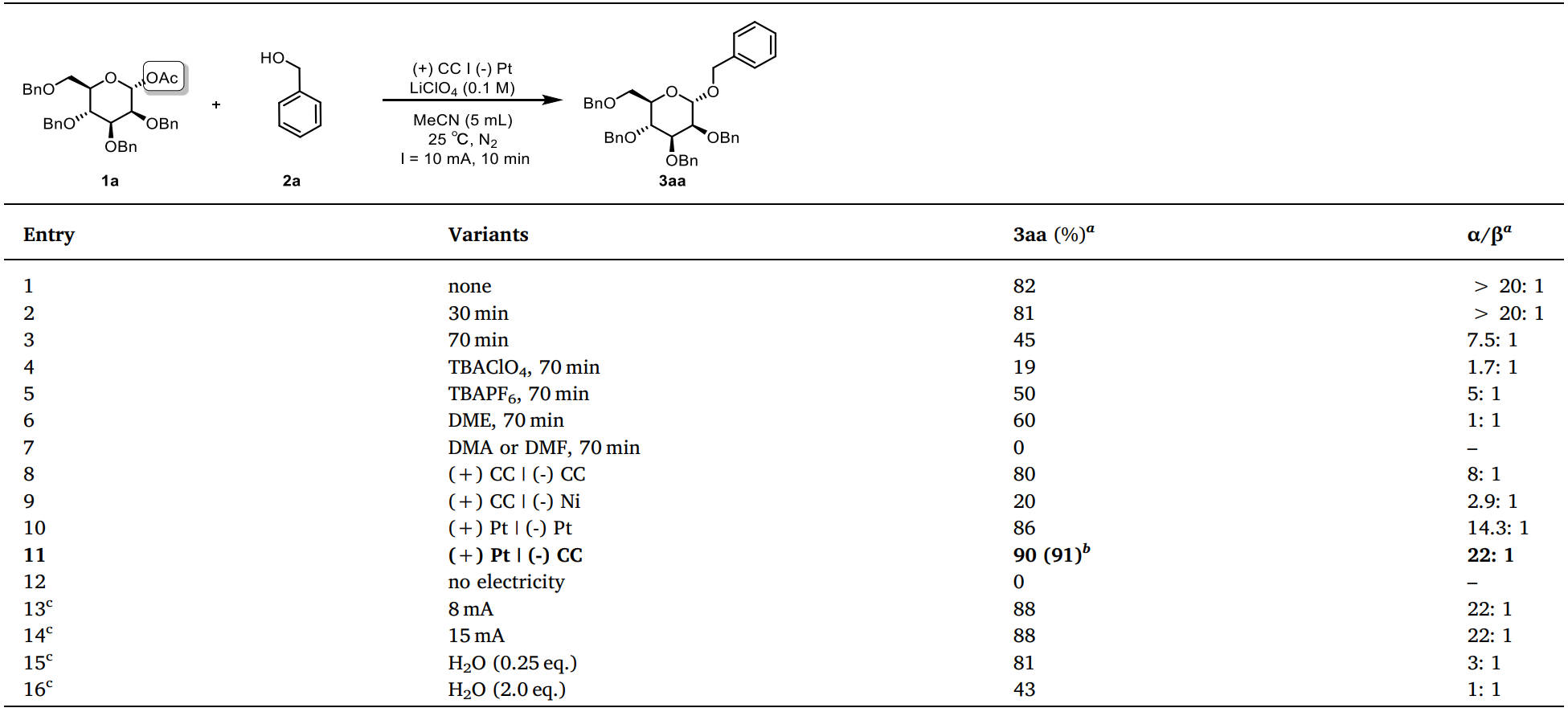
Optimization of electrogenerated acid-catalyzed glycosylation
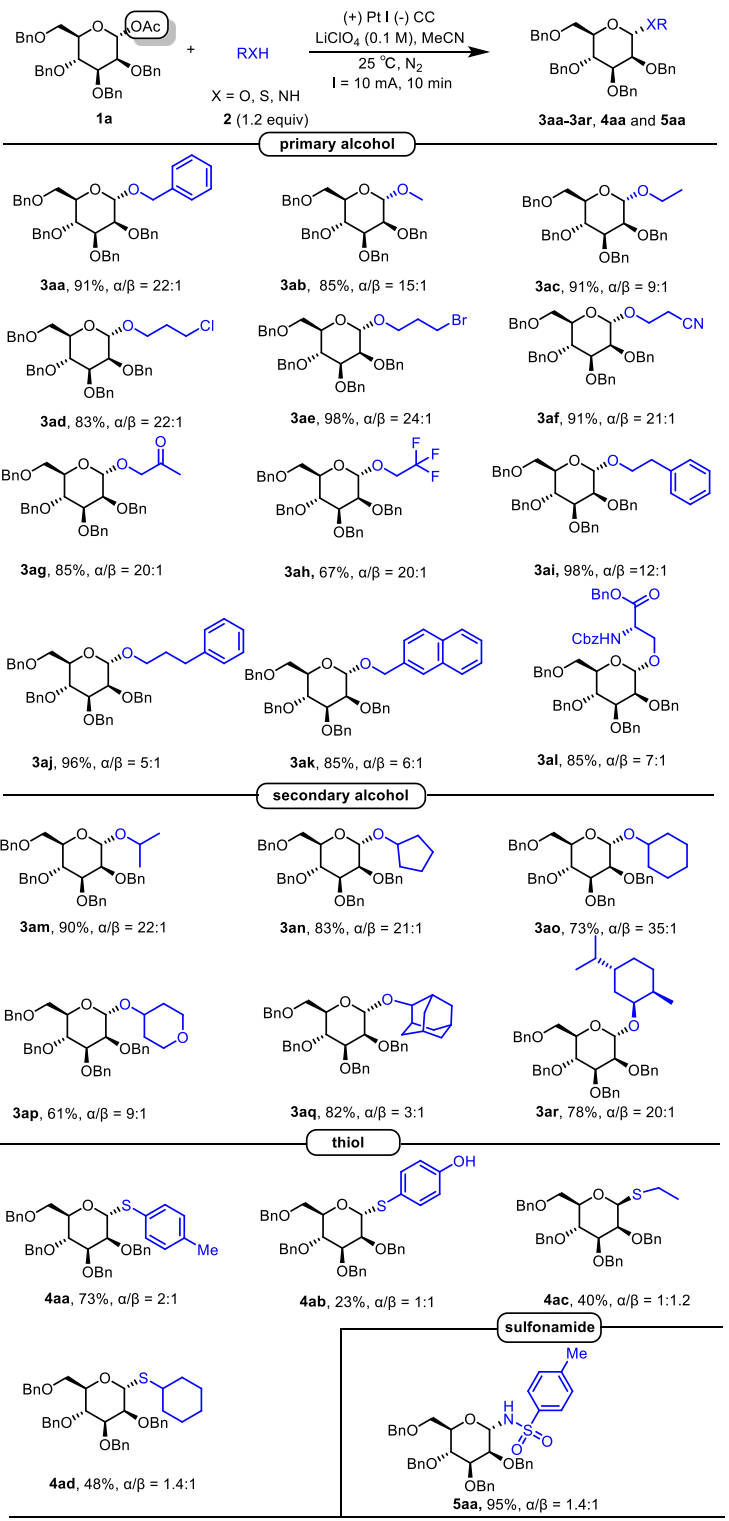
Scope of nucleophiles.

Scope of glycosyl acetates and application in the synthesis of disaccharides.
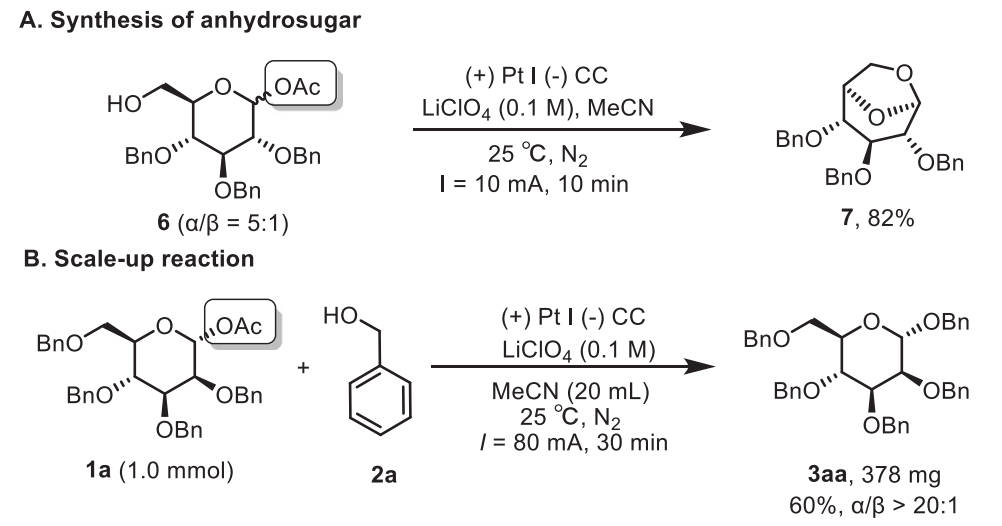
Synthesis of anhydrosugar and Scale-up reaction.
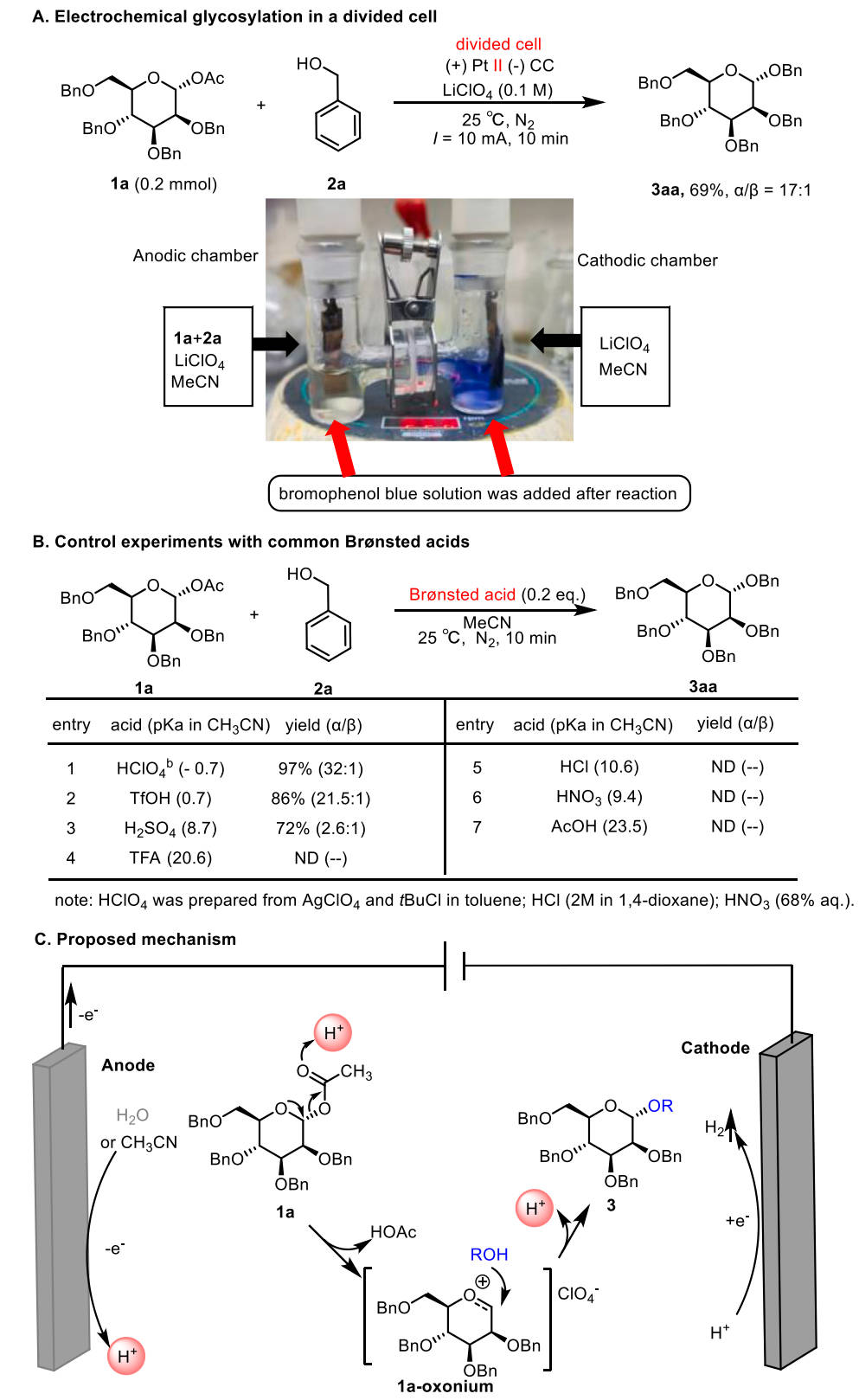
Mechanistic studies.
GA, UNITED STATES, August 12, 2026 /EINPresswire.com/ -- Herein, we report a user-friendly electrocatalytic glycosylation strategy that employs stable and readily available acetyl glycosides as glycosyl donors. The reaction proceeds at room temperature and ambient pressure in an undivided electrolytic cell, enabling rapid access to structurally diverse O‑, S‑, and N‑glycosides, as well as disaccharides, with moderate to excellent diastereoselectivity. The lithium perchlorate/acetonitrile electrolyte system was identified as the optimal reaction medium. Mechanistic studies reveal that a Brønsted acid generated in situ at the anode activates the C–O bond of the acetyl glycosides, thereby initiating the glycosylation process. This method features exceptionally broad substrate scope, excellent functional group tolerance, requires only a catalytic amount of charge (0.1 F/mol), and reaches completion within 10 minutes.
Sugars and sugar-containing molecules are essential for life—they mediate cell recognition, immune responses, and disease processes. Making these complex molecules in the lab, however, is difficult. Traditional methods often require especially pre-activated sugar building blocks, strong acids, toxic promoters, or heating, which limits their practicality and scalability.
A team of researchers from China designed a simple electrochemical approach. They used glycosyl acetates—stable, inexpensive, and shelf‑stable sugar donors in a standard undivided cell—with acetonitrile as the solvent and lithium perchlorate as the supporting electrolyte, and apply only a small electric current (0.1 F/mol) to drive the reaction efficiently. The electricity generated a tiny amount of acid right at the anode, which activated the acetate group and triggers the glycosylation reaction. The whole process was completed within 10 minutes at room temperature.
“This method is applicable to a wide range of alcohol, thiol, and sulfonamide acceptors, affording O‑, S‑, and N‑glycosides in moderate to excellent yields with good stereoselectivity,” says corresponding author Wei-Jun Kong from the School of Chemical Science and Engineering at Tongji University. “It is compatible with various monosaccharide substrates and also enables efficient disaccharide assembly.”
Further mechanistic experiments revealed that the acid is generated electrochemically at the anode, not by the added reagents, and that water was detrimental to the reaction—consistent with an acid‑catalysis mechanism.
“This protocol offers a practical, fast, and environmentally friendlier alternative to conventional glycosylation, and its simplicity should make it attractive for researchers in carbohydrate chemistry, drug discovery, and chemical biology,” adds Kong.
This work presents an electrochemical glycosylation strategy that is free of external acid and operates catalytically, employing simple glycosyl acetates—substrates long considered too unreactive to undergo activation under mild conditions. Traditional electrochemical glycosylation protocols require stoichiometric amounts of electricity to oxidize elaborately modified donors, such as thioglycosides, telluroglycosides, and glycosyl phenoxides. In contrast, our system consumes only a catalytic quantity of charge (0.1 F/mol), with Brønsted acid generated in situ at the anode to drive glycosidic bond formation. This streamlined procedure obviates the need for prefunctionalized sugar donors, toxic activators, or corrosive exogenous acids, and achieves complete substrate conversion within just 10 minutes at room temperature. Overall, this research constitutes a transformative advance in glycosylation chemistry: it harnesses electricity as a traceless activator for inexpensive, unmodified ester donors, opening a sustainable new avenue for carbohydrate synthesis.
Chemical glycosylation is a cornerstone of carbohydrate chemistry, but state-of-the-art methods often rely on complex donors and harsh conditions. This work solves these problems by demonstrating that the simplest acetate-protected sugars can be directly activated by electrogenerated acid. The broad substrate scope (O, S, N acceptors, disaccharides, and even anhydrosugars) and the rapid, room-temperature, scalable operation make it a truly practical tool. It drastically reduces waste, reagent cost, and reaction time, and it is compatible with many functional groups. The mechanistic clarity—showing that acid is produced at the anode—also provides a rational basis for further optimization. This method should lower the barrier for non-specialists to access complex glycans and glycoconjugates, accelerating research in glycobiology and drug development.
References
DOI
10.1016/j.glycos.2026.100046
Original Source URL
https://doi.org/10.1016/j.glycos.2026.100046
Funding information
This work was financially supported by the National Natural Science Foundation of China (22201217, 32101026 and 32471504), and Lingang Laboratory fund (NO. LGL-2614-18).
Lucy Wang
BioDesign Research
email us here
Legal Disclaimer:
EIN Presswire provides this news content "as is" without warranty of any kind. We do not accept any responsibility or liability for the accuracy, content, images, videos, licenses, completeness, legality, or reliability of the information contained in this article. If you have any complaints or copyright issues related to this article, kindly contact the author above.
